
Ultherapy vs. Thermage FLX in Ottawa: What Is the Difference?
Ultherapy and Thermage FLX are both non-surgical skin-tightening treatments, but they use different technologies. Compare ultrasound and radiofrequency treatments in Ottawa.
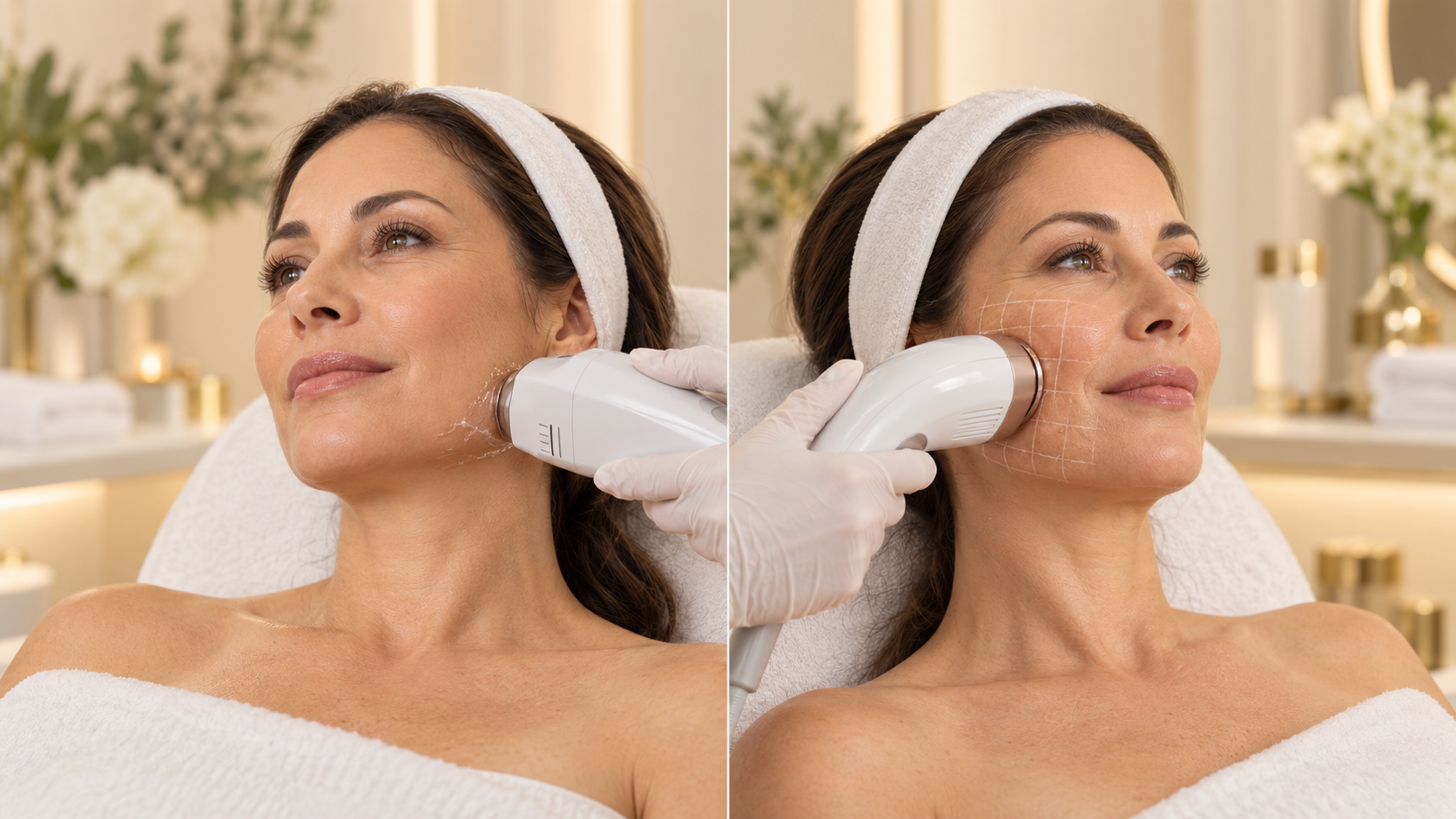
If you are researching non-surgical skin tightening in Ottawa, you may encounter two well-known options: Ultherapy and Thermage FLX.
Both treatments use energy to support the body’s natural collagen response, and both are intended to create gradual, natural-looking changes without surgery. However, they are not the same treatment. Ultherapy uses microfocused ultrasound energy, while Thermage FLX uses monopolar radiofrequency energy.
Understanding that difference is more useful than asking which treatment is universally “better.” The appropriate option depends on your anatomy, treatment area, degree of skin laxity, previous procedures, comfort considerations and goals.
Quick answer: Ultherapy vs. Thermage FLX
- Ultherapy uses microfocused ultrasound energy with real-time ultrasound imaging. It is commonly considered when lifting is the main concern, including areas such as the brow, lower face, under the chin and neck.
- Thermage FLX uses monopolar radiofrequency energy. It is commonly considered for overall firmness, smoothness and contour, including facial and eye-area concerns when appropriate.
This is a general comparison, not an individualized treatment recommendation.
What is Ultherapy?
Ultherapy is a non-invasive treatment that delivers microfocused ultrasound energy beneath the skin. The system also uses ultrasound imaging, allowing the practitioner to view tissue layers and plan energy delivery at selected depths.
The treatment is designed to support the body’s production of collagen and elastin. Changes develop gradually rather than producing the immediate structural alteration associated with surgery.
Depending on suitability, Ultherapy may be considered for areas including:
- Brow area
- Lower face and jawline
- Beneath the chin
- Neck
- Décolleté
Learn more on the Ultherapy in Ottawa treatment page.
What is Thermage FLX?
Thermage FLX is a non-invasive treatment that uses monopolar radiofrequency energy to heat deeper skin tissue while supporting collagen remodeling. It may help improve the appearance of firmness, smoothness and contour over time.
GlowUp MediSpa uses the Thermage FLX platform. Its previous Thermage CPT system is no longer in use, so patients can confirm which device generation is currently offered.
Depending on suitability, Thermage FLX may be considered for concerns involving:
- General facial firmness
- Facial contour
- Fine lines
- Eye-area skin
- Other approved treatment areas assessed during consultation
Learn more on the Thermage FLX in Ottawa treatment page.
The main difference: ultrasound vs. radiofrequency
The most important distinction is the type of energy used.
Ultherapy uses microfocused ultrasound
Ultherapy directs focused ultrasound energy to selected tissue depths. Its real-time imaging feature helps the practitioner view tissue layers during treatment planning and delivery.
Thermage FLX uses monopolar radiofrequency
Thermage FLX delivers radiofrequency energy to heat deeper skin tissue and support collagen remodeling across the treated area.
Neither technology is automatically superior for every patient. Different concerns may call for different treatment strategies.
Which treatment is better for lifting?
Ultherapy is often considered when the primary goal is lifting in areas such as the brow, jawline, under-chin region or neck. Its ultrasound imaging and delivery at selected depths are important parts of treatment planning.
That does not mean every person with skin laxity is automatically an Ultherapy candidate. Anatomy, degree of laxity, tissue quality, medical history and previous treatments must still be assessed.
Which treatment is better for firmness and smoothness?
Thermage FLX is often considered when the primary concern involves overall firmness, smoothness or contour. It can also be discussed for eye-area concerns when appropriate.
The final recommendation should be based on an assessment rather than a single symptom or an online before-and-after photograph.
Do Ultherapy and Thermage FLX have downtime?
Both are non-surgical treatments, and many patients return to their usual activities afterward. However, “non-surgical” does not mean that temporary reactions cannot occur.
After Ultherapy, temporary redness, swelling, tenderness, tingling or numbness may occur. Reported side effects also include pain and transient nerve effects.
After Thermage FLX, temporary redness, swelling, soreness or discomfort may occur. Infrequent complications, including burns, blistering or scarring, are possible.
Your practitioner should explain expected reactions, less common risks and when to contact the clinic before you consent to treatment.
Which treatment is more comfortable?
Treatment sensations vary significantly between individuals and treatment areas.
Ultherapy may produce warmth, tingling or brief moments of discomfort as ultrasound energy is delivered. Thermage FLX may create alternating sensations associated with energy delivery and cooling.
Comfort should not be judged solely from another person’s experience. Ask what you may feel, what comfort options are available and how your feedback will be monitored during treatment.
How quickly do results appear?
Neither treatment should be presented as an instant facelift. Changes generally develop progressively as the body’s collagen response continues.
The timing, degree and duration of improvement vary with age, anatomy, skin condition, treatment plan and individual response. Your practitioner should recommend an appropriate follow-up interval rather than promising an identical timeline for everyone.
Can Ultherapy and Thermage FLX be combined?
Some patients ask whether ultrasound and radiofrequency treatments can be combined. A combination should not be assumed to be necessary or appropriate.
The practitioner must consider your anatomy, previous treatments, timing, treatment areas, medical history and overall plan. In some cases, one treatment may be more appropriate; in others, a staged approach may be discussed. More treatment is not automatically better treatment.
How should you choose between them?
During consultation, ask:
- What is the main concern being treated—lifting, firmness, texture or contour?
- Which device and generation will be used?
- Which areas and tissue depths are being targeted?
- Why is one treatment being recommended for your anatomy?
- What results are realistic?
- What common side effects and uncommon risks should you understand?
- What is the total treatment cost?
- When will your results be assessed?
A clear recommendation should connect the technology to your specific concern rather than rely on broad claims that one device is always best.
Ultherapy and Thermage FLX consultations in Ottawa
GlowUp MediSpa offers Ultherapy and Thermage FLX consultations at 104 Centrepointe Dr, Nepean, ON K2G 6B1.
During consultation, you can discuss your areas of concern, previous procedures, suitability, expected outcomes, possible side effects and pricing. The goal is to determine which option—if either—fits your needs.
Request a consultation or call (613) 218-1936.
Frequently asked questions
Is Ultherapy the same as Thermage?
No. Ultherapy uses microfocused ultrasound energy and real-time ultrasound imaging. Thermage FLX uses monopolar radiofrequency energy.
Is Thermage FLX a laser?
No. Thermage FLX uses radiofrequency energy rather than laser light.
Is Ultherapy a laser?
No. Ultherapy uses ultrasound energy rather than laser energy.
Which is better for the jawline?
The appropriate option depends on what is causing the concern, including skin laxity, tissue distribution and facial structure. An in-person assessment is needed before recommending a treatment.
Which treatment costs more in Ottawa?
Pricing depends on the areas treated and the individualized plan. Comparing advertised starting prices without comparing treatment areas, device generation and the proposed plan may be misleading.
Does GlowUp use Thermage FLX or Thermage CPT?
GlowUp uses Thermage FLX. Its previous Thermage CPT system is no longer in use.
Does GlowUp offer Ultherapy PRIME?
GlowUp currently describes its treatment as Ultherapy rather than Ultherapy PRIME. Ask the clinic to confirm the exact platform available before booking.
Individual results vary. This article provides general information and does not replace an individualized consultation or medical advice.